

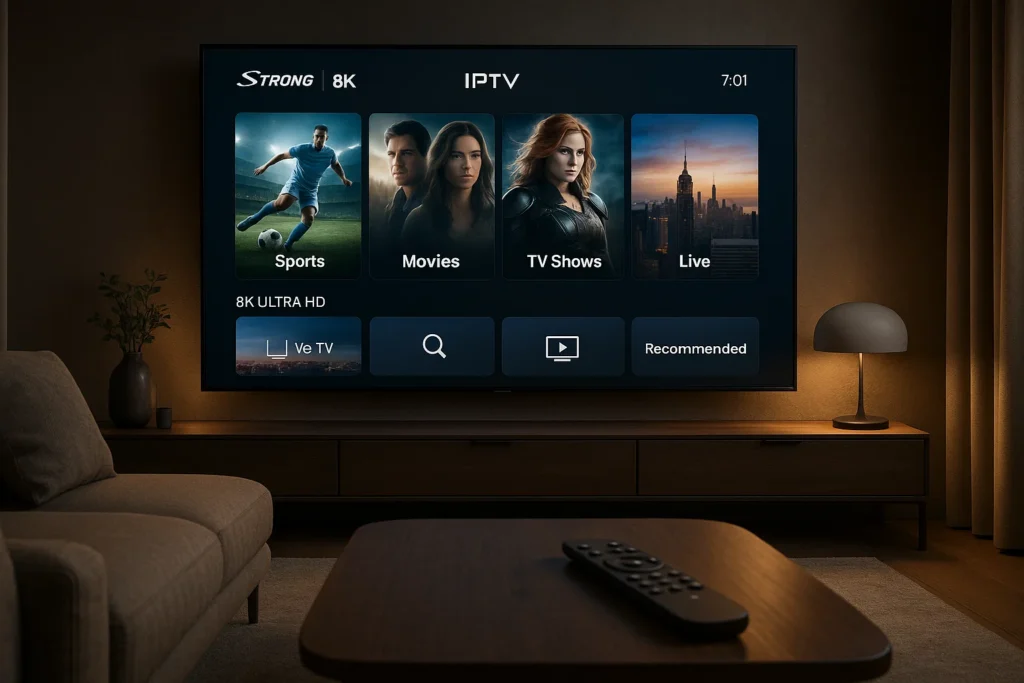
8K IPTV: The Future of Ultra-High Definition Streaming
Meta Description:
Discover how 8K IPTV is redefining entertainment with ultra-high-definition visuals, seamless streaming, and next-generation viewing experiences. Learn what it is, how it works, compatible devices, and the best IPTV options for 8K content.
Introduction: A New Era of IPTV Streaming
The world of television has evolved far beyond traditional cable and satellite services. Internet Protocol Television (IPTV) has already transformed how millions consume entertainment, offering on-demand access, live channels, and streaming flexibility. But just when viewers were getting comfortable with 4K streaming, a new wave of visual excellence is taking shape — 8K IPTV.
8K IPTV brings breathtaking picture clarity, unmatched depth, and realism that’s closer to what the human eye can naturally perceive. With resolutions four times higher than 4K and sixteen times greater than Full HD, 8K streaming is no longer science fiction — it’s here, and it’s changing the entertainment landscape.
In this in-depth guide, we’ll explore what 8K IPTV is, how it works, the technology behind it, internet speed requirements, devices that support 8K IPTV, and what the future holds for this revolutionary technology.
What Is 8K IPTV?
Before diving into 8K IPTV, let’s understand the basics. IPTV stands for Internet Protocol Television, a system that delivers television content via internet protocols instead of traditional satellite or cable formats.
Now, add 8K resolution — which boasts 7680 x 4320 pixels — to this formula, and you get 8K IPTV: the highest quality streaming experience available today.
While 4K IPTV already provides sharp, vivid visuals, 8K takes it a step further. The sheer number of pixels creates ultra-detailed images, allowing viewers to see textures, shadows, and colors with an almost lifelike precision. When paired with a compatible display and a strong internet connection, 8K IPTV transforms your living room into a cinematic experience.
The Rise of 8K Resolution
The journey to 8K didn’t happen overnight. It’s the natural progression in display technology.
-
HD (1080p) introduced clarity.
-
4K made images sharper and more immersive.
-
8K, however, is about depth and realism — it’s not just watching a scene; it’s experiencing it.
TV manufacturers like Samsung, LG, and Sony began introducing 8K TVs in the late 2010s, initially as premium products. As prices have started to drop, 8K-capable devices are becoming accessible to more consumers. Simultaneously, IPTV providers are preparing infrastructure capable of delivering this next-level resolution.
How 8K IPTV Works
8K IPTV uses IP-based streaming technology to transmit high-resolution video signals over the internet. The key components include:
-
Encoding & Compression
8K content generates massive data — uncompressed 8K video can require over 100 Gbps of bandwidth. To make streaming feasible, advanced codecs such as HEVC (H.265) and AV1 compress video data efficiently without significant quality loss. -
Content Delivery Networks (CDNs)
IPTV providers rely on CDNs to distribute 8K streams globally. These networks reduce buffering and maintain consistent playback by caching data closer to users. -
Adaptive Bitrate Streaming (ABR)
ABR automatically adjusts the stream quality based on your internet speed. If bandwidth fluctuates, the player seamlessly shifts between lower and higher resolutions, ensuring uninterrupted playback. -
Decoding & Display
On the user end, compatible devices decode the compressed stream and render the 8K visuals on a suitable display, offering a truly immersive experience.
Internet Requirements for 8K IPTV
While 8K IPTV delivers extraordinary picture quality, it also demands high-speed and stable internet.
To stream 8K IPTV without buffering or pixelation, you’ll need:
-
Minimum speed: 100 Mbps (stable)
-
Recommended speed: 150–200 Mbps for optimal performance
-
Connection type: Wired Ethernet is preferred over Wi-Fi for stability
-
Router: A dual-band or Wi-Fi 6 router ensures smooth performance
Since 8K files are massive, any interruptions or slowdowns can cause playback issues. Hence, a reliable broadband or fiber-optic connection is key.
Devices That Support 8K IPTV
To enjoy 8K IPTV, you need both compatible hardware and software. Here’s what’s required:
1. 8K Televisions
Leading brands like Samsung QN900C, LG Z3 OLED, and Sony Bravia XR Z9K offer advanced 8K TVs with HDR10+ and Dolby Vision support. These displays can render the full resolution and dynamic range of 8K streams.
2. Streaming Devices
High-end streaming boxes such as NVIDIA Shield TV Pro, Apple TV 8K (expected in 2025), or specialized IPTV boxes are being optimized for 8K playback.
3. Media Players
Apps like VLC, Kodi, and Plex are constantly updating to support 8K decoding. For IPTV, services often provide their own 8K-ready applications.
4. Smartphones and Tablets
While few mobile devices support native 8K playback, flagships such as Samsung’s Galaxy Ultra series can stream or record 8K content. However, the full impact of 8K can only be experienced on large screens.
8K IPTV vs 4K IPTV: What’s the Difference?
| Feature | 4K IPTV | 8K IPTV |
|---|---|---|
| Resolution | 3840 x 2160 pixels | 7680 x 4320 pixels |
| Pixel Count | ~8 million | ~33 million |
| Clarity | Excellent | Unparalleled |
| Bandwidth | 25–50 Mbps | 100–200 Mbps |
| Availability | Widely supported | Emerging technology |
The difference becomes especially noticeable on larger screens (65 inches and above). In 8K, even close-up viewing reveals incredible sharpness — ideal for sports, documentaries, and nature content.
Advantages of 8K IPTV
-
Immersive Visuals
The depth, color accuracy, and detail in 8K are unmatched. Every frame feels like you’re part of the scene. -
Future-Proof Technology
As content creators and streaming platforms upgrade, 8K will become the new normal. Investing early ensures long-term compatibility. -
Improved Upscaling
Modern 8K TVs use AI upscaling to enhance lower-resolution content, meaning even 4K or HD IPTV channels look better on 8K screens. -
Enhanced Sports and Gaming Experiences
With frame rates of 120Hz and beyond, 8K IPTV gives sports fans fluid motion and gamers an incredibly detailed environment. -
Better for Large Displays
Unlike 4K, which starts losing sharpness on very large screens, 8K maintains clarity even on 100-inch TVs.
Challenges and Limitations
While the potential is exciting, 8K IPTV still faces hurdles:
-
Bandwidth Demands: Not all users have access to the required internet speeds.
-
Limited Content: Few broadcasters currently produce 8K content.
-
Expensive Hardware: 8K TVs and IPTV boxes remain premium products.
-
Storage and Transmission Costs: Managing massive data files can strain IPTV providers’ infrastructure.
However, as technology evolves, these barriers are rapidly diminishing. With the rollout of 5G and fiber internet, 8K IPTV streaming will soon become mainstream.
Popular IPTV Services Preparing for 8K
While full 8K IPTV content is still emerging, several leading services are testing or preparing for 8K distribution:
-
Netflix – Already streams select titles in 4K HDR and experimenting with 8K originals.
-
YouTube – Offers native 8K playback on supported devices.
-
Samsung TV Plus – Exploring 8K-ready channels for Smart TVs.
-
IPTV Providers (generic) – Premium IPTV services are updating servers and codecs for 8K compatibility.
The future will likely see dedicated 8K IPTV packages, offering ultra-HD movies, sports, and live events.
Legal Considerations for IPTV Users
Before diving into IPTV subscriptions, it’s essential to differentiate between legal and illegal IPTV services.
-
Legal IPTV: Licensed platforms that pay for broadcasting rights (e.g., Hulu Live, Sling TV, YouTube TV).
-
Unverified IPTV: Services that stream copyrighted material without authorization.
Always choose verified providers to ensure safe, legal, and high-quality streaming. Illegal services risk malware, legal action, and poor reliability.
The Future of IPTV: 8K and Beyond
The arrival of 8K IPTV is only the beginning. As AI-based encoding, edge computing, and faster global internet networks advance, IPTV will evolve beyond traditional television. We’re heading toward a world of hyper-personalized, interactive streaming — where users can switch between camera angles, access real-time stats, and even stream holographic content in the future.
Moreover, cloud gaming, virtual reality (VR), and 8K live sports broadcasts will merge to create a unified ecosystem of entertainment, powered by IPTV infrastructure.
Tips for Getting the Best 8K IPTV Experience
-
Use Fiber or 5G Internet for consistent speed.
-
Update your IPTV player and firmware regularly.
-
Connect via Ethernet instead of Wi-Fi for stability.
-
Subscribe to legal IPTV providers with 8K-ready plans.
-
Invest in a quality 8K TV that supports HDR10+ and Dolby Vision.
These small adjustments can significantly enhance the performance and picture quality of your IPTV setup.
Conclusion
8K IPTV represents the pinnacle of home entertainment — blending ultra-high-definition visuals, seamless streaming technology, and cutting-edge hardware. While it’s still an emerging field, the future looks bright. As internet speeds improve and content availability expands, 8K IPTV will become the new standard for immersive viewing.
For now, early adopters can already experience a glimpse of tomorrow’s television — today. Whether you’re a film enthusiast, sports lover, or tech-savvy viewer, 8K IPTV is the next giant leap toward redefining visual entertainment.
