

IPTV with 5000+ Channels – The Complete 2026 Guide to Modern Digital Streaming Technology
Introduction: Why IPTV with 5000+ Channels Is Changing the Streaming Industry
The global television industry has undergone a radical transformation over the past decade. Traditional satellite and cable subscriptions are gradually being replaced by Internet Protocol Television (IPTV) systems that offer greater flexibility, improved quality, and massive content libraries.
In 2026, one of the most searched streaming-related terms worldwide is “IPTV with 5000+ channels.” But what does that really mean? Is it about quantity alone? Or does it represent a broader shift toward digital content ecosystems powered by advanced streaming infrastructure?
In this comprehensive guide, we will explore:
-
What IPTV really is
-
How 5000+ channel ecosystems work
-
The technology behind modern IPTV platforms
-
Legal and compliance considerations
-
Performance optimization
-
The future of IPTV in 2026 and beyond
Table of Contents
-
What Is IPTV?
-
How IPTV with 5000+ Channels Works
-
The Technology Behind Large IPTV Networks
-
Content Categories in Modern IPTV Platforms
-
Video Quality: HD, Full HD, 4K, and Beyond
-
Device Compatibility and Multi-Screen Access
-
IPTV vs Traditional Cable & Satellite
-
Legal Considerations and Licensing
-
SEO Strategy for IPTV-Related Websites
-
User Experience Optimization
-
Security and Privacy in IPTV Systems
-
Monetization Models
-
Future of IPTV in 2026
-
FAQ Section
-
Final Thoughts
1. What Is IPTV?
IPTV stands for Internet Protocol Television, a system where television content is delivered using internet protocols rather than traditional satellite or cable formats.
Instead of broadcasting signals through physical cables or satellite dishes, IPTV delivers content via:
-
Fiber-optic internet
-
Broadband connections
-
Cloud-based content delivery networks (CDNs)
This enables:
-
On-demand content
-
Live TV streaming
-
Time-shifted media
-
Interactive features
2. How IPTV with 5000+ Channels Works
When platforms advertise “5000+ channels,” they typically refer to a large content aggregation system. These systems combine:
-
Live international channels
-
Sports programming
-
Movies
-
Series
-
News
-
Regional content
-
Niche content categories
Infrastructure Components:
-
Content Acquisition
-
Encoding & Transcoding
-
Server Distribution
-
CDN Deployment
-
End-User Playback Systems
Large IPTV systems rely heavily on distributed cloud servers to reduce buffering and improve latency.
3. The Technology Behind Large IPTV Networks
Modern IPTV ecosystems depend on several core technologies:
3.1 Content Delivery Networks (CDNs)
CDNs distribute content globally to minimize latency. Major CDN providers include:
-
Cloudflare
-
Akamai
-
Amazon Web Services
These companies provide scalable hosting environments capable of handling millions of concurrent users.
3.2 Adaptive Bitrate Streaming (ABR)
ABR technology automatically adjusts video quality depending on user internet speed.
This ensures:
-
Less buffering
-
Smooth playback
-
Optimized bandwidth use
3.3 Video Compression Standards
Modern IPTV uses codecs such as:
-
H.264
-
H.265 (HEVC)
-
AV1
These codecs allow 4K streaming at lower bandwidth.
4. Content Categories in IPTV with 5000+ Channels
A 5000+ channel ecosystem typically includes:
Live Television
-
Global news networks
-
Regional programming
-
International language channels
Sports
Major leagues like:
-
Premier League
-
UEFA Champions League
-
NBA
Movies & Series
Content often mirrors major platforms such as:
-
Netflix
-
Disney+
-
Hulu
5. Video Quality Standards in 2026
Modern IPTV supports:
-
HD (720p)
-
Full HD (1080p)
-
4K Ultra HD
-
Emerging 8K streams
Key factors affecting quality:
-
Internet speed (minimum 25 Mbps for 4K)
-
Server stability
-
Device compatibility
-
Compression efficiency
6. IPTV vs Traditional Cable
| Feature | IPTV | Cable |
|---|---|---|
| On-Demand | Yes | Limited |
| Multi-Device | Yes | No |
| Installation | None | Physical |
| Scalability | High | Low |
| Geographic Limits | None | Regional |
7. Legal Considerations
IPTV technology itself is legal. However, licensing agreements determine whether content distribution complies with copyright regulations.
Licensed IPTV services:
-
Acquire broadcasting rights
-
Maintain agreements with studios
-
Follow digital rights management standards
Unauthorized content distribution violates copyright law in many countries.
8. SEO Strategy for IPTV Content Websites
For informational IPTV websites, SEO best practices include:
Keyword Clustering
Primary keyword:
-
IPTV with 5000+ channels
Secondary keywords:
-
IPTV streaming technology
-
Legal IPTV platforms
-
IPTV 2026 guide
On-Page SEO
-
H1 once
-
Optimized meta description
-
Image alt text
-
Structured FAQ schema
Technical SEO
-
Fast loading speed
-
Core Web Vitals optimization
-
Mobile-first design
-
Secure HTTPS protocol
9. Image Suggestions for Higher CTR
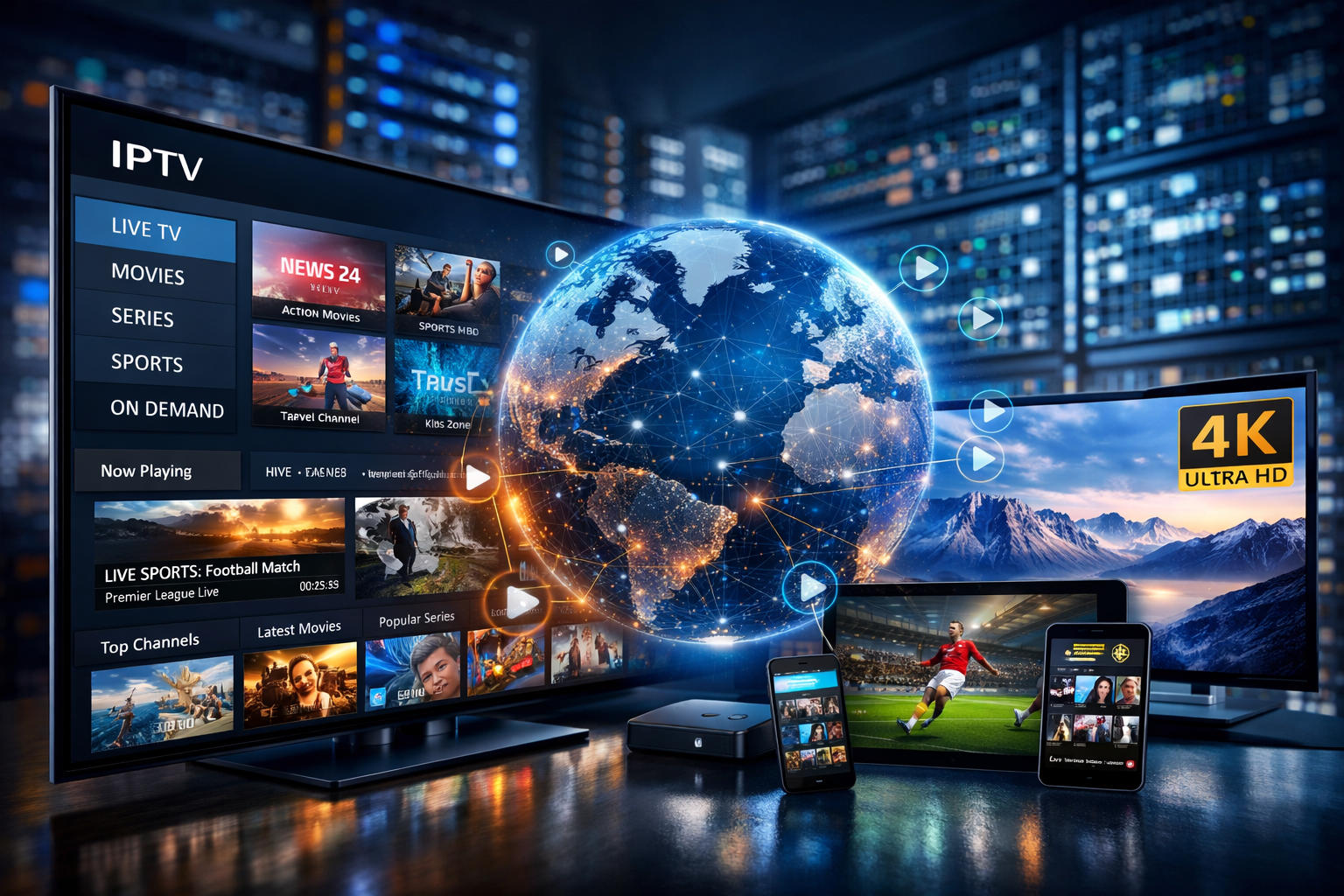
Image 1: IPTV Dashboard Interface
Alt text: “Modern IPTV interface showing 5000+ live channels”
Image 2: 4K Streaming Visualization
Alt text: “Ultra HD IPTV streaming on smart TV”
Image 3: Global Streaming Network Map
Alt text: “IPTV global content delivery network”
إذا أردت، أستطيع الآن:
-
إنشاء الصور فعليًا
-
أو إعطائك Prompt احترافي لتوليدها بالذكاء الاصطناعي
10. Security and Privacy
Modern IPTV platforms integrate:
-
SSL encryption
-
Secure login systems
-
Geo-based access control
-
Account management dashboards
11. The Future of IPTV (2026–2030)
Trends include:
-
AI-powered recommendations
-
Personalized content feeds
-
Cloud DVR systems
-
8K streaming
-
VR broadcasting
Companies investing in cloud infrastructure such as Google Cloud are expected to shape the next phase of streaming evolution.
12. FAQ Section (SEO Optimized)
What does IPTV with 5000+ channels mean?
It refers to platforms aggregating thousands of global live streams and on-demand content libraries.
Is IPTV legal?
The technology is legal; legality depends on content licensing.
What internet speed is required?
-
HD: 10 Mbps
-
4K: 25 Mbps
-
8K: 50+ Mbps
Can IPTV replace cable?
In many regions, yes—especially where broadband penetration is high.
Final Thoughts
IPTV with 5000+ channels represents more than just content volume. It symbolizes the next generation of digital broadcasting—scalable, customizable, and globally accessible.
As streaming continues to dominate the entertainment industry, understanding infrastructure, legality, and user experience will be essential for businesses and consumers alike.
13. Monetization Models in IPTV Platforms
IPTV services, whether educational, legal, or commercial, rely on several monetization strategies:
13.1 Subscription-Based Model
This is the most common method for legitimate IPTV platforms. Users pay a recurring fee for access to premium content. Benefits include:
-
Predictable revenue streams
-
Ability to invest in better server infrastructure
-
Premium features like multi-device streaming
Example: Platforms like Netflix, Hulu, or Disney+ follow this model.
13.2 Ad-Supported Model
Some platforms offer free access to content but monetize via ads:
-
Pre-roll and mid-roll ads
-
Banner ads integrated into the UI
-
Partnerships with advertisers targeting niche audiences
13.3 Hybrid Model
A combination of subscription and ad-supported services. Users may pay a smaller subscription to reduce ads, offering flexibility.
Internal Linking Example:
For more details on streaming monetization, check our guide on Streaming Revenue Strategies.
14. Optimizing User Experience for Large IPTV Networks
For platforms offering 5000+ channels, UX (User Experience) is critical:
14.1 Channel Organization
-
Categorize channels by genre, country, or language
-
Implement search and filter options
-
Include favorite lists and recently watched sections
14.2 Multi-Device Support
Modern IPTV must work seamlessly across:
-
Smart TVs
-
Smartphones & tablets
-
PCs and laptops
-
Streaming boxes and consoles
14.3 Performance & Buffering Reduction
Tips for better UX:
-
Use multi-CDN networks for low latency
-
Implement adaptive bitrate streaming (ABR)
-
Cache popular content at edge servers
Internal Linking Example:
Learn how to improve streaming performance in our IPTV Performance Optimization Guide.
15. Advanced Technology Trends in IPTV
15.1 AI-Powered Content Recommendation
AI algorithms analyze viewing habits to recommend personalized content. Benefits:
-
Increased user retention
-
Higher engagement metrics
-
Better ad targeting
15.2 Cloud DVR & Time-Shifted Viewing
Users can record shows in the cloud and watch later, a feature growing in popularity.
15.3 Integration with Smart Home Systems
Future IPTV services will integrate with:
-
Voice assistants (Alexa, Google Assistant)
-
Smart speakers and IoT devices
-
Home automation for personalized viewing experiences
16. Security & Privacy Best Practices
Maintaining a secure IPTV platform is essential:
-
Implement HTTPS & SSL encryption
-
Use secure authentication systems (OAuth, 2FA)
-
Protect content with DRM (Digital Rights Management)
-
Monitor and block unauthorized access
Internal Linking Example:
For security strategies, see IPTV Security & Privacy Checklist.
17. Legal & Compliance Considerations
17.1 Licensing Requirements
IPTV platforms must obtain proper broadcasting rights. This can include:
-
Regional licensing for movies or sports
-
Contracts with content providers
-
Compliance with international copyright laws
17.2 Country-Specific Regulations
IPTV services must adhere to local regulations. Examples:
-
EU: GDPR compliance for user data
-
US: DMCA adherence for copyright content
-
Canada: CRIA rules for music & broadcast rights
Internal Linking Example:
Learn more about IPTV Legal Compliance for safe operations.
18. Global Adoption of IPTV in 2026
By 2026, IPTV adoption continues to grow worldwide:
-
Asia-Pacific: Rapid expansion due to high broadband penetration
-
Europe: Growth fueled by legal OTT platforms
-
North America: Dominated by subscription-based IPTV services
-
Africa & Latin America: Emerging markets seeing increased mobile streaming
19. FAQ Section – Extended for SEO
What is the difference between IPTV and OTT?
-
IPTV delivers content via IP networks, often managed by telecoms. OTT (Over-the-Top) streams content over the open internet.
Can I watch IPTV on mobile devices?
-
Yes, modern IPTV platforms are optimized for Android, iOS, tablets, and even web browsers.
How do IPTV platforms handle 5000+ channels?
-
Using multi-CDN distribution, adaptive bitrate streaming, and cloud-based server infrastructure.
Is 8K streaming possible via IPTV?
-
Technically yes, if your device, bandwidth, and server support it. Future IPTV platforms are already testing 8K streams.
How to ensure legal IPTV usage?
-
Only use services that provide licensed content and comply with local broadcasting laws.
20. Conclusion: The Future of IPTV with 5000+ Channels
IPTV with 5000+ channels represents a new era of digital entertainment. By combining advanced technology, legal compliance, optimized UX, and monetization strategies, platforms can deliver:
-
Ultra-high-definition content
-
Personalized viewing experiences
-
Global accessibility
The key takeaway for 2026 and beyond: investing in infrastructure, security, and legal licensing is essential for any sustainable IPTV service.
