

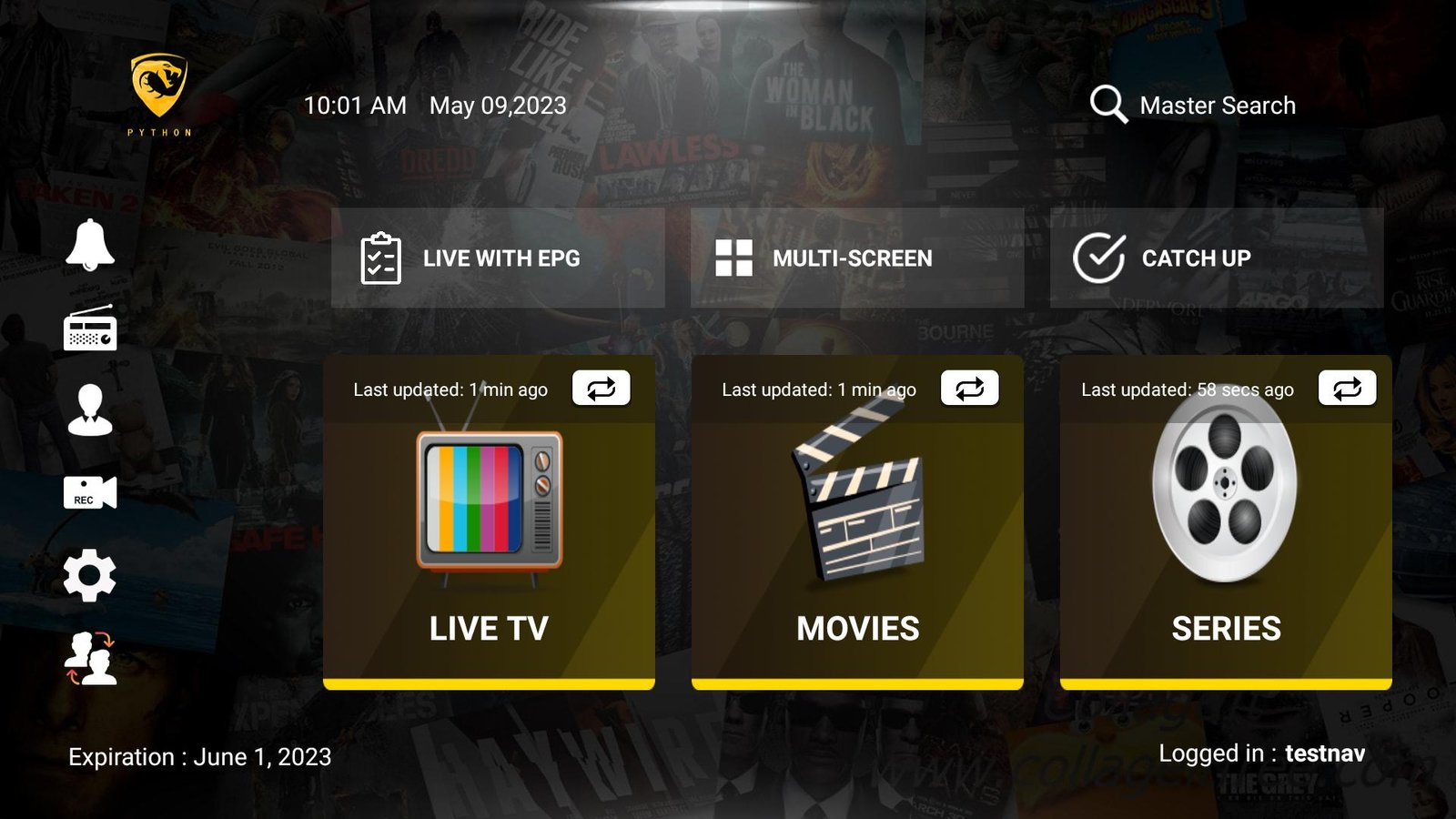
Python IPTV: Building and Automating IPTV Systems with Python
Introduction
The world of digital television has evolved rapidly in the past decade. Traditional broadcasting systems have slowly given way to IPTV (Internet Protocol Television) — a technology that delivers live TV, on-demand videos, and multimedia content over the internet. Instead of relying on satellite or cable, IPTV uses internet protocols to stream media directly to users’ devices.
But what does Python have to do with IPTV?
Python, a versatile and powerful programming language, has become one of the most widely used tools in IPTV development. From streaming automation, EPG (Electronic Program Guide) parsing, and playlist generation to backend APIs and video encoding workflows, Python plays an integral role in modern IPTV systems.
In this article, we’ll take a deep dive into Python IPTV development, covering its key components, libraries, tools, examples, and real-world applications. Whether you’re a developer, a system integrator, or a tech enthusiast, this comprehensive guide will help you understand how Python powers IPTV platforms.
What is IPTV?
Before we explore Python’s role, let’s first understand IPTV.
IPTV (Internet Protocol Television) is a method of delivering television content using internet networks instead of traditional terrestrial, satellite, or cable television formats. IPTV relies on IP-based networks to deliver TV channels, movies, and other video content to viewers in real-time or on-demand.
Main IPTV Types
-
Live Television
-
Streams TV channels in real-time over the internet.
-
Example: Watching live sports, news, or entertainment.
-
-
Time-Shifted Media
-
Allows users to watch previously aired programs at a later time.
-
Example: Catch-up TV.
-
-
Video on Demand (VOD)
-
Users choose what they want to watch from a catalog.
-
Example: Netflix-style streaming.
-
-
Near Video on Demand
-
Scheduled VOD service for a limited number of users.
-
Why Use Python in IPTV Development?
Python has become a go-to language for IPTV development for several reasons. Let’s explore why it’s such a strong fit:
1. Simplicity and Speed
Python’s simple syntax and readability make it ideal for developing IPTV automation tools, APIs, and scripts quickly. Developers can build prototypes faster compared to C++ or Java.
2. Extensive Libraries
Python’s ecosystem offers thousands of libraries for:
-
Networking (requests, socket, aiohttp)
-
Data Parsing (xml, json, BeautifulSoup)
-
Video Processing (ffmpeg-python, OpenCV, moviepy)
-
Web Development (Flask, Django, FastAPI)
-
Automation (paramiko, schedule, subprocess)
3. Cross-Platform Compatibility
Python scripts can run on Linux, Windows, and macOS — essential for IPTV systems that often rely on distributed servers and embedded systems.
4. Integration Power
Python easily integrates with IPTV hardware and software systems, such as:
-
Encoders and transcoders
-
Middleware and EPG servers
-
IPTV management dashboards
-
M3U playlist generators
5. Automation-Friendly
Python is often used to automate IPTV tasks:
-
Fetching EPG XMLTV data
-
Converting streams to M3U playlists
-
Monitoring stream health
-
Updating URLs for live channels
Core Components of a Python IPTV System
A typical IPTV setup powered by Python involves several parts. Let’s break them down.
1. Playlist Management (M3U/M3U8)
M3U or M3U8 files list IPTV channels and their streaming URLs. Python can automate the creation, validation, and updating of these playlists.
Example: Simple Python M3U Generator
This simple code creates a custom IPTV playlist that can be used with most IPTV players.
2. EPG (Electronic Program Guide) Parsing
The EPG provides metadata about programs — titles, start times, and descriptions. IPTV services rely on XMLTV format for this.
Python Example: Parsing EPG XML
Python easily reads XMLTV files to integrate schedule data into IPTV interfaces or apps.
3. Stream Checking and Validation
Python can monitor whether IPTV streams are online, buffering, or broken.
Example: Stream Validation Script
This automation helps IPTV providers ensure that their channels are always functional.
4. Video Transcoding and Encoding
Python interfaces with FFmpeg, a popular video conversion tool, to transcode IPTV streams into various formats.
Using ffmpeg-python:
This allows Python to automate video format conversions for adaptive streaming.
5. Backend APIs with Flask or FastAPI
Python frameworks like Flask and FastAPI are perfect for IPTV management APIs. These APIs can deliver data to mobile apps or web dashboards.
Example: Simple IPTV API
Running this code creates an API endpoint that returns channel data — ideal for IPTV apps.
Advanced IPTV Automation with Python
As IPTV systems scale, automation becomes critical. Python scripts can handle complex workflows like:
1. Auto-Updating Channel Links
If a channel link changes frequently, a Python script can fetch new URLs and replace outdated ones in your M3U playlist.
2. Scheduled EPG Updates
Using the schedule or cron modules, Python can periodically fetch new XMLTV EPG data.
3. Logging and Monitoring
Python can track stream uptime, log errors, and send alerts using logging, smtplib, or Telegram bots.
4. CDN Integration
Python scripts can connect with CDNs (Content Delivery Networks) to manage caching and ensure low latency streaming.
5. IPTV Analytics
With libraries like pandas and matplotlib, developers can visualize user engagement, stream performance, and viewer trends.
Popular Python Libraries for IPTV Development
| Library | Purpose |
|---|---|
requests |
Fetch IPTV stream and EPG data |
BeautifulSoup |
Parse HTML/XML for channel data |
ffmpeg-python |
Video encoding/transcoding |
Flask / FastAPI |
Backend IPTV API development |
asyncio / aiohttp |
Asynchronous stream validation |
pandas |
Data analytics for IPTV usage |
schedule |
Automating periodic IPTV tasks |
socket |
Building low-level IPTV communication |
m3u8 |
Parsing and creating M3U8 playlists |
Building a Python IPTV Management Dashboard
A more advanced IPTV system can be built with:
-
Backend: FastAPI or Django REST Framework
-
Database: PostgreSQL or SQLite for storing channels and EPG
-
Frontend: React or Vue.js for admin UI
-
Video Streaming Engine: FFmpeg + Nginx RTMP
-
Automation Scripts: Python Cron jobs to update playlists and EPG
This setup allows full control over your IPTV ecosystem — from ingesting video sources to distributing streams.
Practical Use Cases of Python in IPTV
1. IPTV Providers and Middleware Systems
Companies use Python to manage subscription APIs, monitor streams, and integrate billing systems.
2. Home Media Servers
Python powers tools like Kodi and Plex plugins to fetch IPTV M3U playlists and EPG data dynamically.
3. Smart IPTV Boxes
Some Android-based IPTV boxes use Python scripts for configuration, channel sorting, and OTA updates.
4. IPTV Analytics Dashboards
Python enables data visualization for channel popularity, uptime, and user activity.
5. Automated IPTV Crawlers
Python scrapers collect publicly available IPTV links, filter valid ones, and compile them into playlists.
Challenges in IPTV Development
While Python simplifies IPTV management, there are still challenges to address:
-
Stream Stability — Many IPTV sources go offline frequently.
-
Legal Restrictions — Using unlicensed IPTV sources can violate copyright laws.
-
Bandwidth Requirements — High-quality 4K streams demand strong servers and CDNs.
-
Security — Preventing unauthorized access or restreaming is vital.
-
Scalability — Managing thousands of live streams efficiently requires robust infrastructure.
Legal Considerations
It’s important to note that not all IPTV sources are legal.
Python developers should focus on:
-
Integrating with licensed IPTV providers
-
Using open or freely available content
-
Complying with copyright and DMCA laws
Developing IPTV systems for legitimate content delivery (e.g., internal corporate TV, educational streaming, or church broadcasting) is fully legal and a growing market segment.
Future of Python in IPTV
The future of IPTV development is leaning toward AI-driven personalization, adaptive bitrate streaming, and cloud-native architectures. Python’s adaptability positions it well for these trends.
-
AI-based Recommendation Systems: Using TensorFlow or Scikit-learn to suggest content.
-
Real-time Analytics: Stream health monitoring with asynchronous Python.
-
Cloud Integration: Python automation with AWS Lambda, Google Cloud Functions, or Azure.
-
IoT Integration: Smart TVs and IPTV boxes communicating with Python APIs.
Conclusion
Python has transformed how developers build and manage IPTV systems. Its simplicity, flexibility, and vast ecosystem make it the perfect tool for developing everything from M3U playlist generators to full-scale IPTV management platforms.
Whether you’re:
-
Creating your own IPTV player,
-
Building middleware for a streaming business,
-
Or simply automating EPG updates for your home setup,
Python offers the speed and reliability needed to make IPTV smarter, more efficient, and future-ready.
In the evolving digital entertainment landscape, Python IPTV is not just a tool — it’s the foundation of innovation in modern video streaming.
